


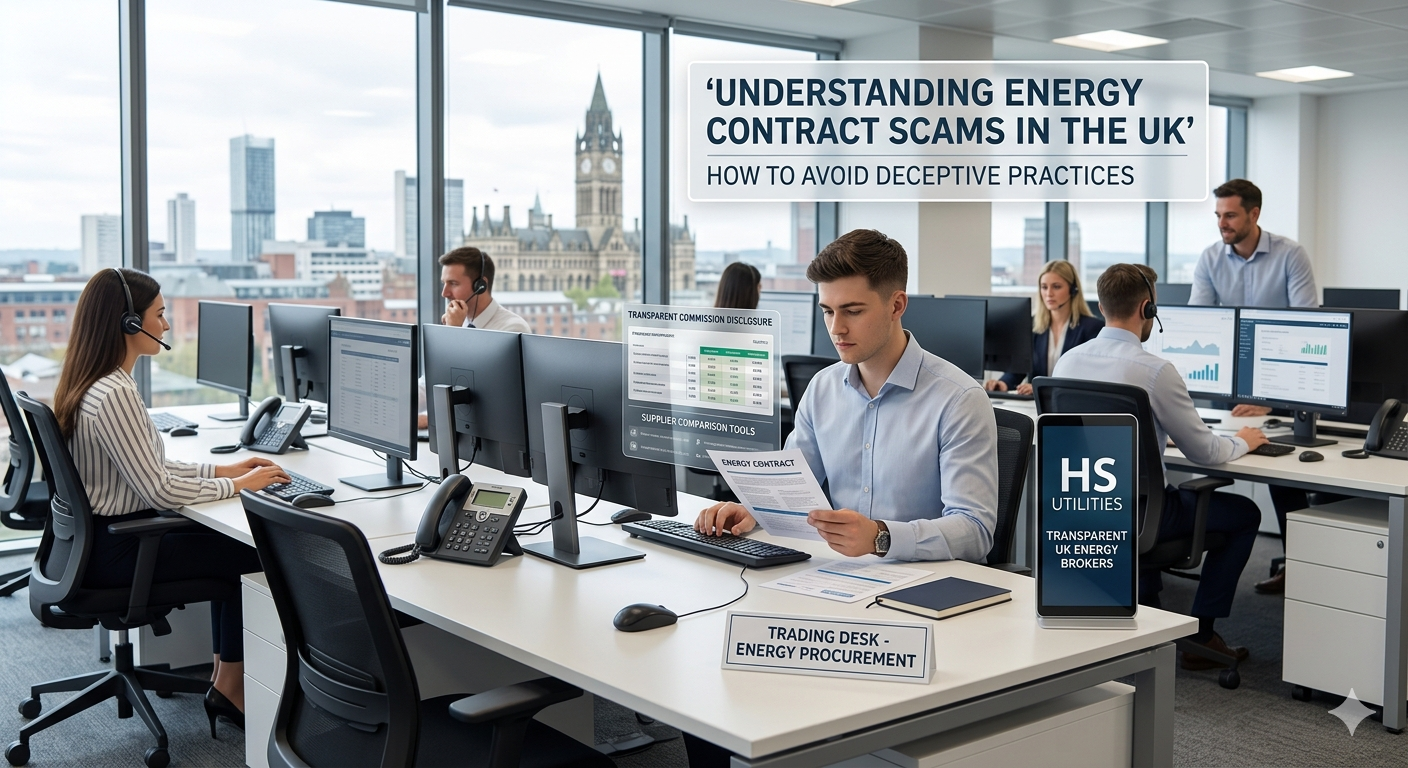
Understanding Energy Contract Scams in the UK
Energy contract scams are misleading or unethical practices used by some brokers or third-party agents to lock businesses into expensive or unfair energy agreements.
These scams do not always look obvious. In fact, many businesses only realize they have been overcharged months or years later when their bills remain unexpectedly high.
Common issues include hidden commissions, unclear pricing structures, and manipulated savings claims.
Industry investigations have shown that some brokers do not fully disclose their commission structure, leading to inflated energy costs for businesses.
Why Energy Scams Are Becoming More Common
The UK energy crisis and fluctuating wholesale prices have made businesses more vulnerable than ever.
Scammers take advantage of:
- Rising electricity and gas prices
- Business owners under financial pressure
- Confusing contract terms
- Lack of industry knowledge
Small and medium-sized businesses are the most common targets because they often lack dedicated energy procurement teams.
How Energy Contract Scams Actually Work
1. Hidden Commission Structures
Some brokers add hidden margins into unit rates instead of openly charging fees.
2. Misleading Savings Promises
Brokers may claim unrealistic savings compared to your current contract.
3. Fake Urgency Sales Tactics
You may be told the offer expires today to pressure quick signing.
4. Verbal Agreement Manipulation
Some contracts are confirmed verbally without written proof.
5. Supplier Misrepresentation
Scammers may pretend to represent your existing supplier.
Email Our Experts
Send EmailTop Warning Signs of Energy Contract Scams
Here are clear red flags every business should watch for:
- No written contract provided immediately
- Pressure to sign quickly
- Unclear pricing explanation
- No disclosure of commission
- Calls claiming to be your supplier (but aren’t)
- Unrealistic savings claims
If any of these appear, stop immediately and verify the source.
How to Avoid Energy Contract Scams in the UK
Now let’s focus on practical protection strategies that every business can use.
Always Demand Written Contracts
Never rely on verbal confirmation. Every agreement must be documented clearly.
Compare Multiple Suppliers
Do not accept the first offer. Compare at least 3–5 suppliers.
Ask About Broker Fees
Transparent brokers clearly explain how they are paid.
Avoid Pressure-Based Selling
Legitimate energy brokers never force urgent decisions.
Review Contract Length Carefully
Long contracts can trap businesses in high rates during market drops.
Monitor Renewal Dates
Missing renewal deadlines can push businesses into expensive rollover tariffs.
Our UK Office
35 Sage Close, Stoke-On-Trent, ST1 3SF
Role of a Trusted Energy Broker
A trusted energy broker helps businesses reduce costs safely without hidden risks.
Instead of manipulating prices, they provide:
- Transparent supplier comparisons
- Fair commission disclosure
- Contract management support
- Renewal tracking
You can explore professional services here:
Why Businesses Fall Into Energy Scams
Most scams succeed because business owners are busy and trust appearing professional callers.
Common reasons include:
- Lack of time to compare energy deals
- Confusing contract language
- Trust in fake authority claims
- Fear of missing savings opportunities
Scammers exploit urgency and confusion.
Need Help?
Contact UsHow to Verify a Legitimate Energy Broker
Before working with any broker, check:
- Company registration details
- Online reviews
- Website transparency
- Clear contact information
Always verify through official sources like Companies House.
For trusted guidance, visit: HS Utilities Agency Page
What to Do If You Already Signed a Bad Contract
If you suspect you’ve been misled:
- Contact your supplier immediately
- Request full contract documentation
- Check cancellation terms
- Report misleading behavior
You can also reach support here: Contact HS Utilities
Electricity Broker
Learn MoreFuture of Energy Contracts in the UK
The UK energy market is moving toward greater transparency, but scams still exist.
Future trends include:
- More digital contract verification
- Stricter broker regulations
- AI-based pricing comparison tools
- Greater transparency requirements
Final Thoughts
Understanding How to Avoid Energy Contract Scams in the UK is essential for every business owner looking to reduce costs safely.
By staying alert, comparing suppliers, and working only with transparent brokers, businesses can protect themselves from financial loss and secure fair energy deals.
For more insights and updates, visit: HS Utilities Blog
